
Event News
Award-winning sustainability and creativity ‘stand-out’ at ICE and iGB Affiliate Barcelona
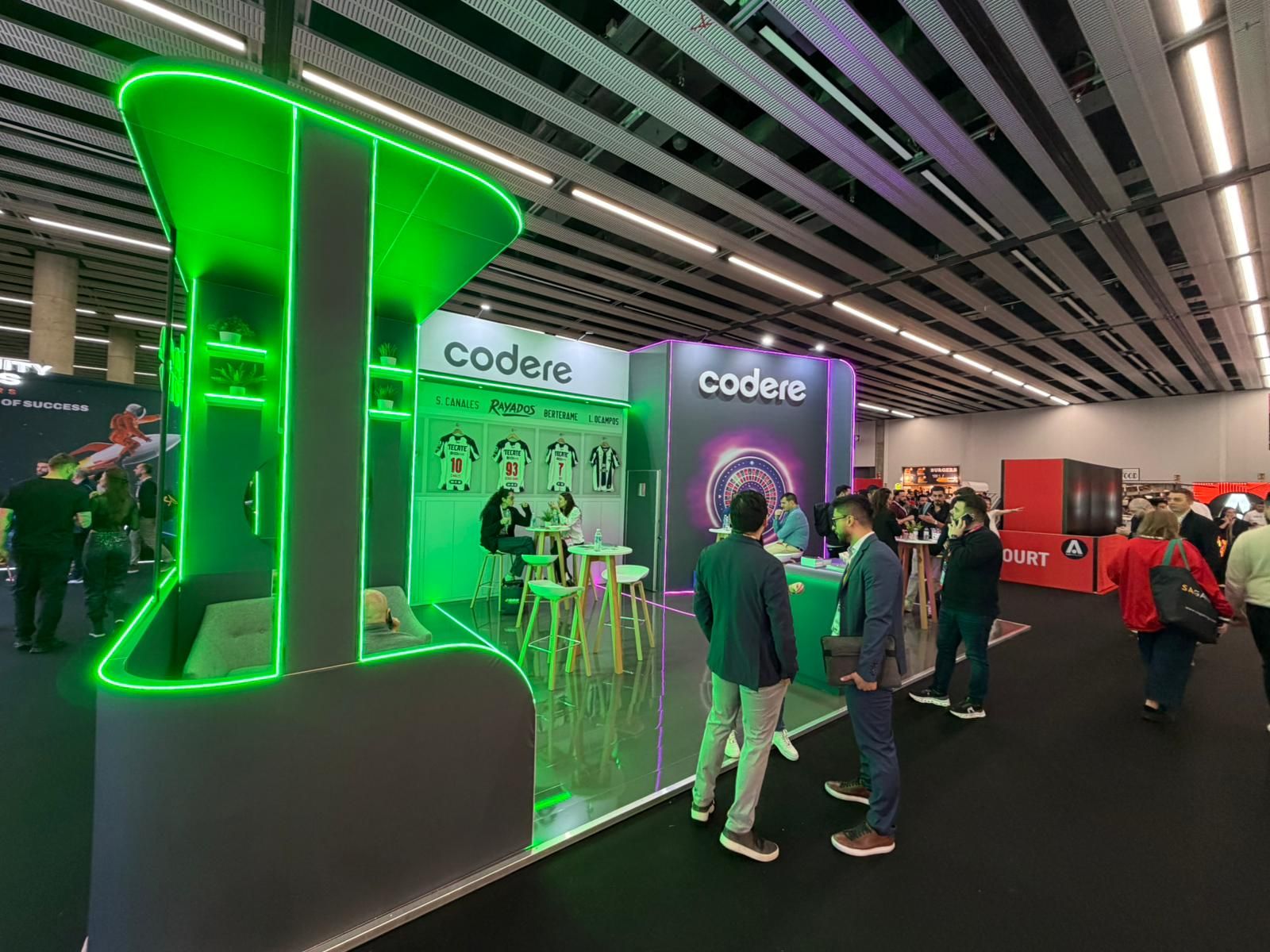
You won 15 Sustainability Gold awards at ICE/iGB Affiliate Barcelona. Does Symbiosis specialise in sustainability?
Sustainability isn’t a bolt-on for Symbiosis, it underpins how we design, build, and deliver every project. We’ve spent years developing a model that combines creative design with modular BeMatrix systems and reusable components, allowing us to deliver high-impact stands that are also resource-efficient. Our approach is rooted in reducing waste, reusing assets, and rethinking traditional build methods. That commitment runs across our entire team, from design through to build and delivery, because sustainable outcomes rely on everyone working towards the same goals. The 15 Better Stands Gold awards at ICE and iGB Affiliate Barcelona reflect that long-term commitment. We consistently deliver stands that meet the highest sustainability benchmarks, not just through material choices, but through smarter planning, logistics, and full lifecycle thinking.
In practical terms, what does a sustainable exhibition stand comprise - where are the easy wins in terms of maximising the percentage of recycled materials?
A sustainable stand is built around efficiency and longevity rather than one-off use. In practical terms, this includes: modular systems that can be reconfigured and reused across multiple events, responsibly sourced or recycled structural materials, graphics, flooring, and surface finishes designed for reuse and eventual recycling, LED lighting and energy-efficient AV solutions and planned storage and asset management to maximise lifespan between shows. One of the biggest ‘easy wins’ is designing for reuse from day one. Creating flexible structures that adapt to different footprints significantly reduces material consumption over time. For example, our stand for Aircash at ICE Barcelona was immediately reconfigured after the show closed and reappeared in a slightly different size at Enada Primavera in Rimini just a few weeks later. Another key factor is consolidation. Managing design, build, logistics, and storage under one roof helps reduce transport emissions and avoids unnecessary duplication. Ultimately, it’s not about one major change, it’s about consistently making better decisions at every stage.
Is a sustainable stand a boring stand – does it limit how a brand represents itself?
Not at all. If anything, it drives better design. Sustainability demands a more considered and intelligent approach. Rather than relying on wasteful build techniques, we focus on creativity within smarter frameworks, which often results in more refined and impactful outcomes. And it certainly doesn’t mean compromising on presence — you only have to look at our feature-rich Titans stand at iGB Affiliate Barcelona to see that sustainable design can still deliver scale, energy, and standout visual impact. Modular systems are incredibly versatile, enabling us to create exciting, immersive, and highly customised environments. The result is a stand that delivers both visually and commercially, while also aligning with a brand’s environmental values.
How have exhibitors changed their attitude towards sustainability – is it something they now specify in the design and construction brief, or something you have to push?
With clients placing increased focus on CSR, there’s been a clear and positive shift towards sustainable solutions. More are now including sustainability within their initial brief, asking about reuse, materials, and environmental impact from the outset. It’s increasingly viewed as a core requirement rather than an optional extra. That said, our advisory role remains important. We work closely with clients to translate ambition into practical solutions, balancing sustainability with design objectives, budgets, and operational realities. The conversation has evolved from ‘selling sustainability’ to ‘delivering on expectations.’
Are there national differences in terms of the importance exhibitors place on sustainability?
Yes, there are still some regional differences. Markets such as Germany, the Nordics, and parts of Northern Europe tend to be more advanced, often driven by regulation and strong environmental frameworks. Clients from these regions typically come with clear sustainability requirements and a high level of awareness. However, the global landscape is shifting rapidly. Sustainability is now firmly on the agenda across all major exhibition markets, and expectations are rising everywhere.
How important is it for event organisers to promote sustainability in the way that ICE and iGB Affiliate approached the challenge in Barcelona?
It’s absolutely critical. Event organisers have a unique ability to influence behaviour at scale, setting clear standards, encouraging best practice, and creating frameworks that both exhibitors and contractors can align with. The approach taken by ICE and iGB Affiliate Barcelona, particularly through initiatives like Better Stands and mandatory waste removal policies, helps normalise sustainable design and delivery, while also recognising and rewarding those investing in doing things properly. Just as importantly, it reinforces that sustainability isn’t the responsibility of one team or one supplier, it requires buy-in at every level. From organisers and contractors through to designers, project managers, and on-site crews, everyone has a role to play in delivering meaningful change. When organisers lead from the front, the wider industry follows. It creates consistency, raises expectations, and ultimately accelerates meaningful, long-term progress.